Smart Home: Top 5 Apps for Managing Your Smart Home in 2024
Introduction: Why Do We Even Need These Apps?
Right, let's be honest: who among us hasn't dreamt of controlling their home with just a flick of the finger? A smart home isn't just a trendy fad anymore; it's a reality that makes our lives easier and more comfortable. According to a study by MarketsandMarkets, the global smart home market will reach £135.3 billion by 2025. Impressive, innit?"A smart home isn't just a bunch of gadgets; it's a whole ecosystem that adapts to your lifestyle and makes your everyday life more efficient and pleasant," says Alexei Korolev, an IoT technology expert.And you know what? The heart of this ecosystem is precisely these smart home management apps. They link all devices together and allow us to be proper wizards in our own flat. Want to know which apps deserve a spot on your smartphone screen in 2024? Let's sort it out!
Selection Criteria: What Did We Look At?
Before we get to our top 5, let's break down the criteria we used to pick these apps:- Functionality: number of supported devices and capabilities
- Ease of use: intuitive interface and easy setup
- Reliability: stable operation and data security
- Integration: compatibility with various smart home ecosystems
- User reviews: real-world usage experience
Top 5 Smart Home Management Apps
1. SmartThings: The Jack of All Trades in the IoT World
 SmartThings from Samsung is a proper Swiss Army knife in the smart home world. This app supports a massive number of devices, not just from Samsung, but from other manufacturers too. It's like that cool kid from school who's mates with everyone.
Key Features:
- Support for over 5000 devices from various brands
- Intuitive interface with customisation options
- Advanced automation scenarios
- Integration with voice assistants (Alexa, Google Assistant, Bixby)
2. Home Assistant: For Those Who Like to Keep Their Finger on the Pulse
 If you're one of those geeks who loves to tinker with settings and get full control over your smart home, then Home Assistant is your faithful companion. It's an open-source platform that gives you virtually limitless customisation possibilities.
Key Features:
- Support for over 1000 integrations
- Local control without the need for cloud services
- High level of privacy and security
- Powerful automation tools
3. Google Home: Simplicity and Integration into the Google Ecosystem
 Google Home is like that old mate you've known for years. It might not dazzle with superpowers, but it's always there and ready to help. This app is perfect for those who already use other Google products and want a simple and reliable smart home solution.
Key Features:
- Integration with other Google services (Calendar, Maps, YouTube, etc.)
- Simple and understandable interface
- Support for a large number of devices from different manufacturers
- Built-in Google Assistant voice assistant
4. Apple Home: For Fans of the Apple Ecosystem
 If you live in the Apple world and have more Apple gear at home than in the average orchard, then Apple Home is your choice. This app is like a good whisky - it's not for everyone, but those who appreciate it won't trade it for anything else.
Key Features:
- Seamless integration with Apple devices
- High level of security and data encryption
- Support for the Thread protocol for fast and stable communication
- Simple and elegant interface in Apple style
5. Hubitat: For Connoisseurs of Local Control
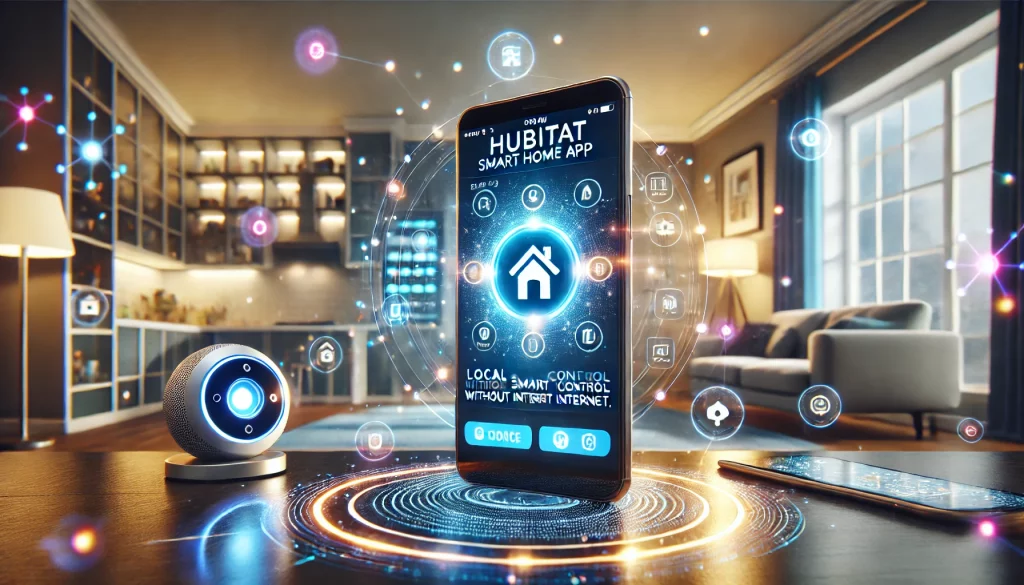 Rounding out our top 5 is the Hubitat app. It's like if Home Assistant and SmartThings had a baby - powerful, but more user-friendly. The main feature of Hubitat is fully local control without the need to connect to the cloud.
Key Features:
- Local control without delays
- High level of privacy
- Support for a wide range of protocols (Z-Wave, Zigbee, Lutron)
- Advanced automation capabilities
Comparison Table of Apps
| App | Device Support | Local Control | Setup Complexity | Voice Assistant Integration |
|---|---|---|---|---|
| SmartThings | Very High | Partial | Medium | Alexa, Google, Bixby |
| Home Assistant | High | Yes | High | Alexa, Google, own |
| Google Home | High | No | Low | Google Assistant |
| Apple Home | Medium | Partial | Low | Siri |
| Hubitat | High | Yes | High | Alexa, Google |
Statistics and Trends
According to Statista, by 2025, the number of households using smart home systems will reach 478 million worldwide. Meanwhile, according to an IoT Analytics report, the most popular categories of smart home devices are:- Smart speakers and displays (32%)
- Security systems (17%)
- Smart lighting (16%)
- Thermostats (13%)
- Smart locks (6%)
Frequently Asked Questions (FAQ)
-
Q: Do I need a hub to control my smart home?
A: It depends on the system and devices you've chosen. Some apps, like SmartThings and Hubitat, require a hub for full functionality. Others, like Google Home, can work without additional equipment, but with limited functionality. A hub usually provides more stable operation and advanced automation capabilities. -
Q: How safe are smart home apps?
A: Safety largely depends on the specific app and your approach to using it. Most modern apps use data encryption and two-factor authentication. However, it's important to regularly update your software and use complex passwords to protect your system. -
Q: Can I use multiple apps simultaneously?
A: Yes, many users combine different apps to achieve optimal results. For example, you can use Home Assistant for complex automation and Google Home for voice control. The main thing is to make sure your devices are compatible with your chosen apps.
How to Choose the Right App for Your Smart Home
Choosing the perfect smart home management app is like finding the perfect pair of jeans. You need to try on a few before you find the one that fits like a glove. Here are some tips to help you make the right choice:- Assess your needs: Do you need simplicity or full control? Do you want to dive deep into settings or prefer an out-of-the-box solution?
- Check compatibility: Make sure the chosen app supports all your smart devices. There's nothing worse than discovering that your favourite light bulb doesn't work with the new app.
- Think about the future: Choose an app that can grow with your smart home system. Maybe you only have smart light bulbs now, but what if tomorrow you want to add a smart thermostat?
- Evaluate the ecosystem: If you're already deeply immersed in the Apple or Google ecosystem, it might be worth sticking with their proprietary solutions for smoother integration.
- Try before you buy: Most apps offer free versions or trial periods. Take advantage of this to see how comfortable you are with the interface and functionality.
The reviews (0)