Winery management software: how a winery should choose a CRM for data processing
Wineries almost always have one hidden problem: everything depends on people, not processes. As long as “that one admin” is on the team, reservations don't get lost, guests are remembered, requests are taken into account, and the schedule more or less stays on track. But as soon as that person goes on vacation, gets sick, or simply gets tired, the familiar picture begins: confusion with slots, delays in correspondence, duplicate entries, dissatisfied guests, and silence in reviews.
 That's why winery management software isn't “just another service,” but an attempt to bring the business together into a system where everything works consistently, regardless of who is on duty today. If you are currently in the selection stage, a convenient starting point is the review. Best winery management software: there it is easier to understand what solutions are available and how they differ in general.
But even a good overview does not answer the main question: how do you know if the program is right for you in the real life of a winery — with tastings, tours, private events, and on-site sales? Let's break it down in human terms.
That's why winery management software isn't “just another service,” but an attempt to bring the business together into a system where everything works consistently, regardless of who is on duty today. If you are currently in the selection stage, a convenient starting point is the review. Best winery management software: there it is easier to understand what solutions are available and how they differ in general.
But even a good overview does not answer the main question: how do you know if the program is right for you in the real life of a winery — with tastings, tours, private events, and on-site sales? Let's break it down in human terms.
 Here is the first list — short and practical. It can literally be used as a demo script:
 That's why winery management software isn't “just another service,” but an attempt to bring the business together into a system where everything works consistently, regardless of who is on duty today. If you are currently in the selection stage, a convenient starting point is the review. Best winery management software: there it is easier to understand what solutions are available and how they differ in general.
But even a good overview does not answer the main question: how do you know if the program is right for you in the real life of a winery — with tastings, tours, private events, and on-site sales? Let's break it down in human terms.
That's why winery management software isn't “just another service,” but an attempt to bring the business together into a system where everything works consistently, regardless of who is on duty today. If you are currently in the selection stage, a convenient starting point is the review. Best winery management software: there it is easier to understand what solutions are available and how they differ in general.
But even a good overview does not answer the main question: how do you know if the program is right for you in the real life of a winery — with tastings, tours, private events, and on-site sales? Let's break it down in human terms.
What breaks down most often at a winery — and where software can help
A winery differs from a regular restaurant in that you have several types of visits at the same time. Tastings are organized by slots, tours by schedule and duration, events by specific rules, and sales in the tasting room are often tied to the mood of the guest and the work of the team. Mistakes here are usually not about the product — the wine may be excellent — but about expectations and organization. If the system is unable to properly manage slots and guest history, you will inevitably end up with “manual crutches”: Excel, notes on your phone, correspondence in messengers, stickers on your monitor. And with each passing month, it only gets worse — because the number of repeat guests is growing, there are more formats, and the team is changing. To avoid buying a “pretty showcase,” it makes sense to determine in advance which features are really critical.Mini checklist: what to check before buying (without fanaticism)
 Here is the first list — short and practical. It can literally be used as a demo script:
- The system works confidently with slots and different types of visits (tasting, tour, private event), not just “table reservations.”
- You can see the guest's history: what they booked, what they prefer, what notes were made, and it's easy to find in 5 seconds.
- Transfers, cancellations, and group mergers are done painlessly — not by “recreating the reservation and not forgetting to write in the chat.” .
- Reminders and confirmations look human: no spam and no dry robot.
- The administrator and the team on site understand what to do without a week of training.
Table: how a winery can compare solutions and avoid mistakes
Below is a simple comparison template. It’s not “perfect,” but it helps you evaluate candidates in a clear-headed way.
| Criterion | What matters specifically for a winery | How to quickly test it in a demo |
|---|---|---|
| Time slots & visit formats | Different durations, capacity limits, buffer times, zones/areas | Ask them to model 3 formats within one day |
| Guest CRM | History, preferences, notes, guest segments | Find a guest by phone/name and check past visits |
| Rescheduling & cancellations | No data loss and no manual “reminder” workarounds | Reschedule a booking and make sure all comments stay attached |
| Guest communication | Confirmations, reminders, instructions | Ask to see message templates and automation settings |
| Analytics | No-show rate, occupancy/load, revenue per slot/hour | Ask which reports are available “out of the box” |
This table is useful because it stops you from drowning in features. It focuses on the processes that actually impact revenue and the guest experience.
Reputation and reviews: a quiet lever that many underestimate
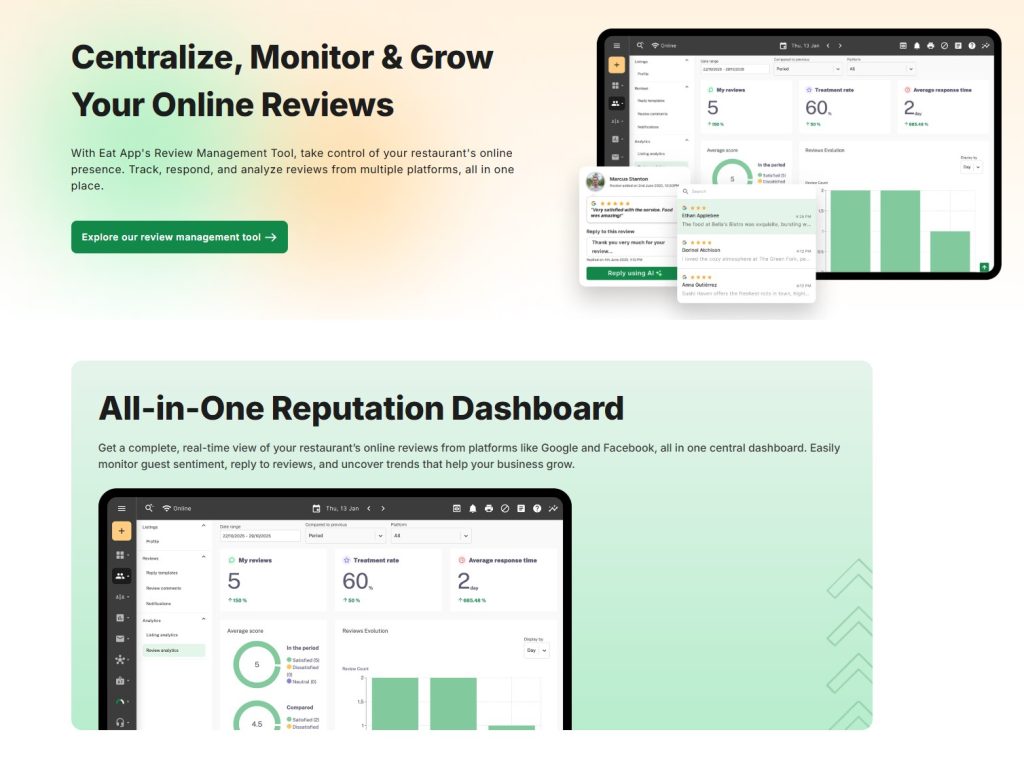
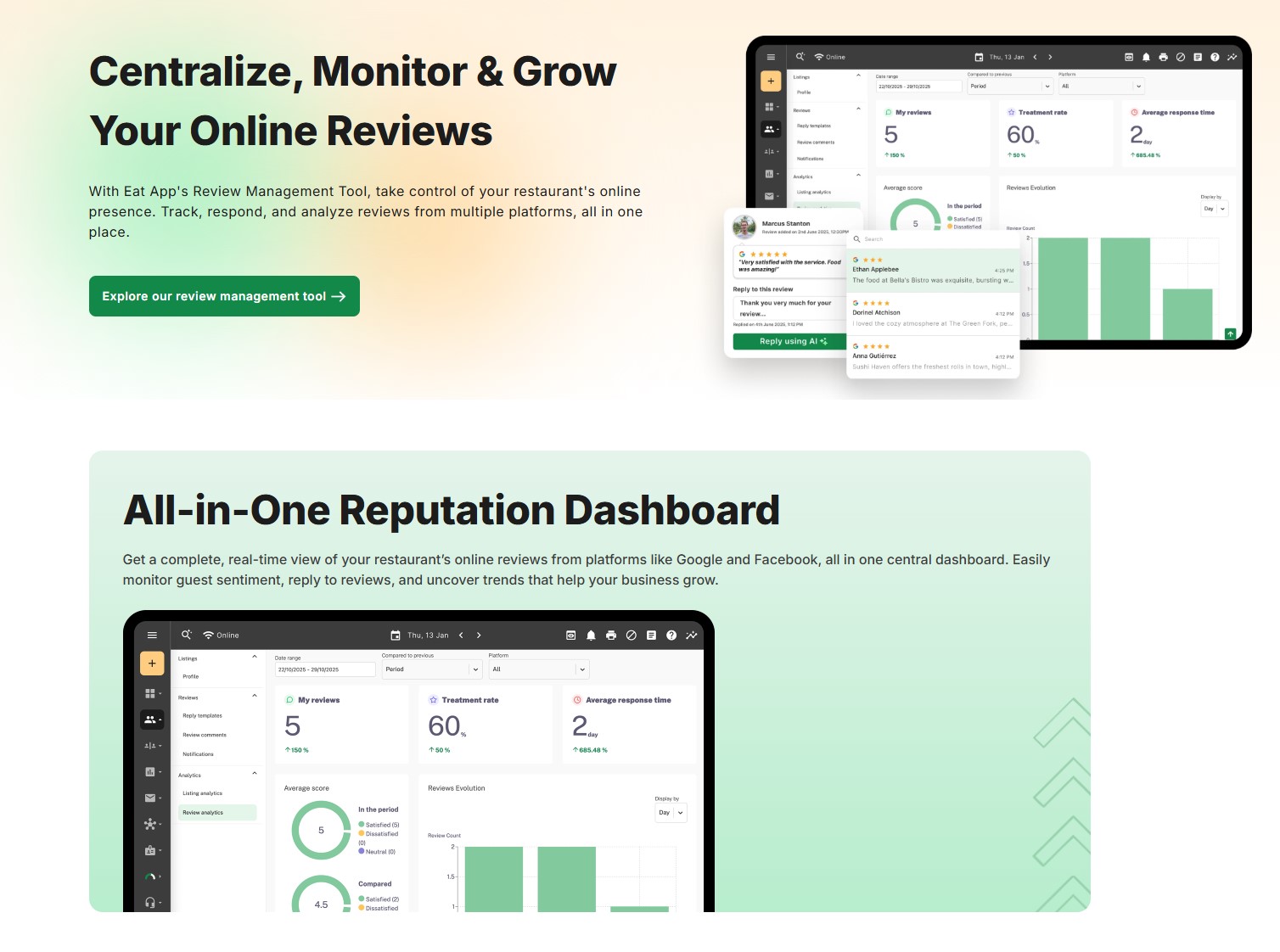
There is one thing that usually comes up later, when everything seems to be set up: reviews. Negative feedback in wineries often arises not because of the wine, but because of small things—unclear rules, waiting times, delays, lack of response. This is where software can play a role not as a marketing tool, but as part of the operating system: collecting feedback, helping to respond in a timely manner, and identifying recurring problems. You can see how this is implemented in a separate module here: Eat App. The point is not to “ask for a five,” but to close the weak spots in the service before they become public.Good software does not make a winery better on its own. It ensures that the quality of the guest experience does not depend on one person and one lucky day.
How to implement it so that the team doesn't resist and everything really works
The second and final list is about implementation. It's short because discipline is important here, not a 40-page manual.- Start with one area: for example, only tastings or only tours. When it starts to work consistently, add the next format.
- Record the rules in one place: what to ask when booking, how to confirm, how to reschedule, who is responsible. Without this, any software turns into chaos in a beautiful shell.
- Give the team “quick wins” in two weeks: fewer no-shows, less confusion, fewer manual messages, faster service. When people see the benefits, they stop sabotaging.
The reviews (0)